Episode 204
204 - Dr. Minhas Khan
May 10th, 2026
1 hr 4 mins 57 secs
Season 9
Your Host
Tags
About this Episode
In this episode of Crossing Faiths, John Pinna speaks with Dr. Minhas Khan from Peshawar University about the complexities of intra-faith relations and the limitations of Samuel Huntington’s "Clash of Civilizations" theory. They explore how the perception of the Muslim world as a monolithic entity is often a reductive Western construct used to serve political agendas, rather than an accurate reflection of its diverse cultural and ethnic landscapes. The conversation delves into the historical and structural roots of internal divisions within Islam, such as the Sunni-Shia divide, arguing that these fractures are frequently exacerbated by deliberate foreign engineering and statecraft rather than purely ancient theological hatred. Pinna and Khan also examine the ongoing geopolitical tensions between the U.S., Israel, and Iran, highlighting the role of resource control—specifically oil—and the unique position of Pakistan as a potential diplomatic mediator in a region where economic interests often override religious identity.
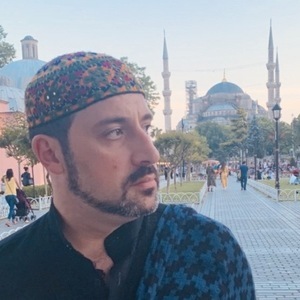
Dr. Minhas Majeed Khan is an Assistant Professor of International Relations at University of Peshawar, Khyber Pakhtunkhwa (KP), Pakistan.
Born in Lakki Marwat, a remote area in the South of KP, she was married at the age of 16 due to which she had to discontinue her studies. With the support of her husband and three children she took a restart after 16 years of marriage and obtained her Ph.D. degree in International Relations in 2013.
Dr. Khan teaches various courses to students of Masters level, MPhil and Ph.D. She is currently supervising one Ph.D., one Mphil and six undergrads dissertations. She has to her credit various publication in national and international academic journals.
Her areas of interest focus on the study of religion and its role in politics, role of gender in peace and security, foreign policy decision-making, conflict resolution, US and Pakistan relations; regional politics of South, South West and Central Asia, the Pakhtuns; and Federally Administered Tribal Areas (FATA).
As a Muslim woman, she strongly feels committed to strengthen the role of women in conflict transformation and peace building in a diverse setting with an aim at promoting peace and tolerance for a peaceful and stable international society.
Dr. Khan is an active member of Pakistan Girls Guide Association and member to Regional Institute of Policy Research and Training (RIPORT) Board of Directors since 2010.
Support Crossing Faiths